
Puff Print That Still Stands Up on the Twentieth Wash
Jafsu Enterprises is a custom puff print supplier that cuts, sews, prints and cures in one building. Plastisol puff ink through low-mesh screens, puff transfers for short runs, on hoodies, heavyweight sweatshirts and unisex tees we make ourselves. Samples start at one piece, production at 20, and the strike-off you approve is the height bulk is matched against.
WhatsApp +92 347 0849427 · info@jafsuenterprises.com · every enquiry answered within 24 hours

What Is Puff Print, and Why Does It Fail?
Puff print is screen printing with a blowing agent mixed into plastisol ink. The design is laid down flat through a coarse mesh, then heat in the dryer sets off the agent and the ink expands upward, leaving a raised, rounded print you can feel through a fingertip. Jafsu Enterprises prints it on garments we cut and sew ourselves, from one sample piece and 20-piece production runs.
Two things decide whether it looks like a premium drop or a blob. The first is artwork: puff grows sideways as well as up, so thin lines close, small counters fill and gradients disappear. The second is cure. Under-cured puff never reaches full height; over-cured puff collapses and scorches. Both are settled before bulk, on a strike-off you hold in your hand. Our puff print hoodie production guide covers the design rules and curing in detail.
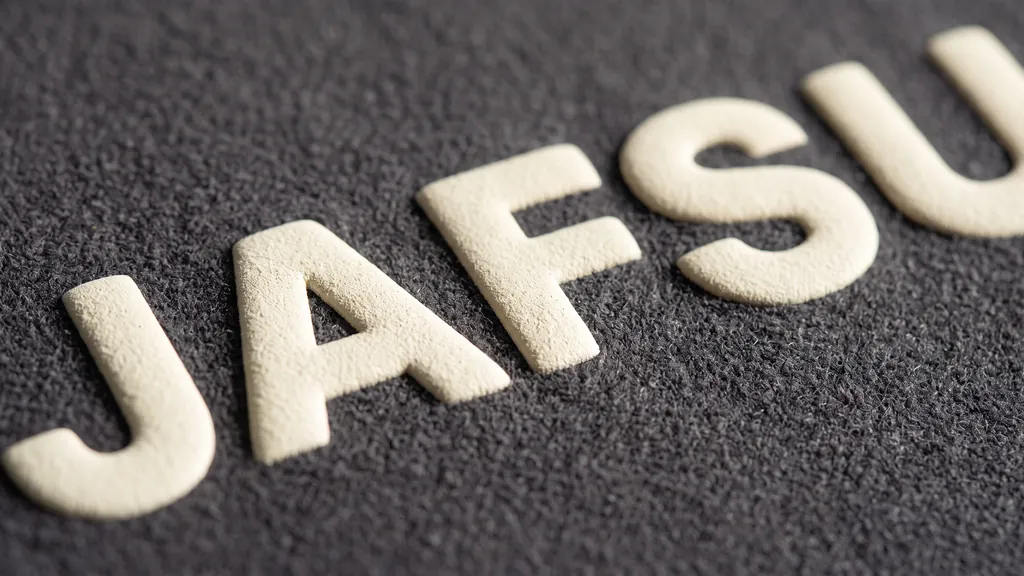
Buyers rarely complain about the first sample. They complain when the reorder comes back flatter, because mesh, squeegee pressure, ink deposit and dryer temperature were never written down.
So they get written down here. The numbers further down this page are the ones a custom puff print supplier should be able to hand you before anything is cut.
Custom Puff Print Across the Whole Capsule
Every piece is cut and sewn to your own block first, then printed — never a stock blank with a raised graphic added at the end.

Custom hoodie puff print
Pullover, full-zip and half-zip bodies in brushed three-end fleece, printed at chest, back and sleeve. Heavy fleece takes puff well because the surface is dense enough to support the deposit instead of swallowing it. See the hoodie options.
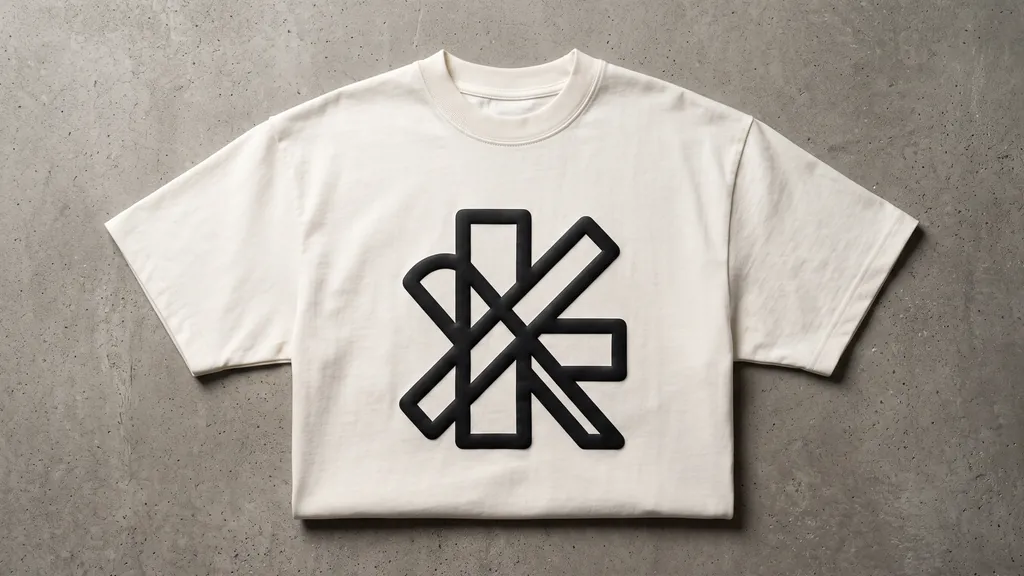
Custom puff print t shirt, short sleeve unisex
Boxy and drop-shoulder unisex bodies in combed cotton or CVC jersey. On lighter jersey we keep the deposit lower so the print flexes with the cloth rather than fighting it. Our t-shirt production covers 180 GSM up to heavyweight.
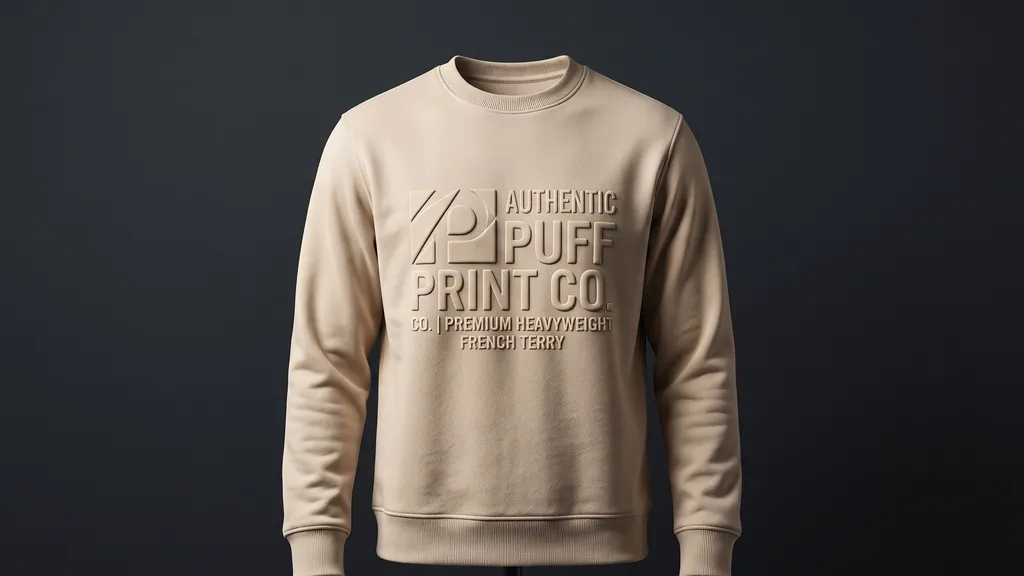
Custom heavyweight sweatshirts, puff ink printing
Set-in and drop-shoulder crewnecks in French terry or brushed fleece. Tonal puff — ink matched to the garment colour — is the cleanest way to use it, because the raise carries the design and the eye reads texture instead of contrast.
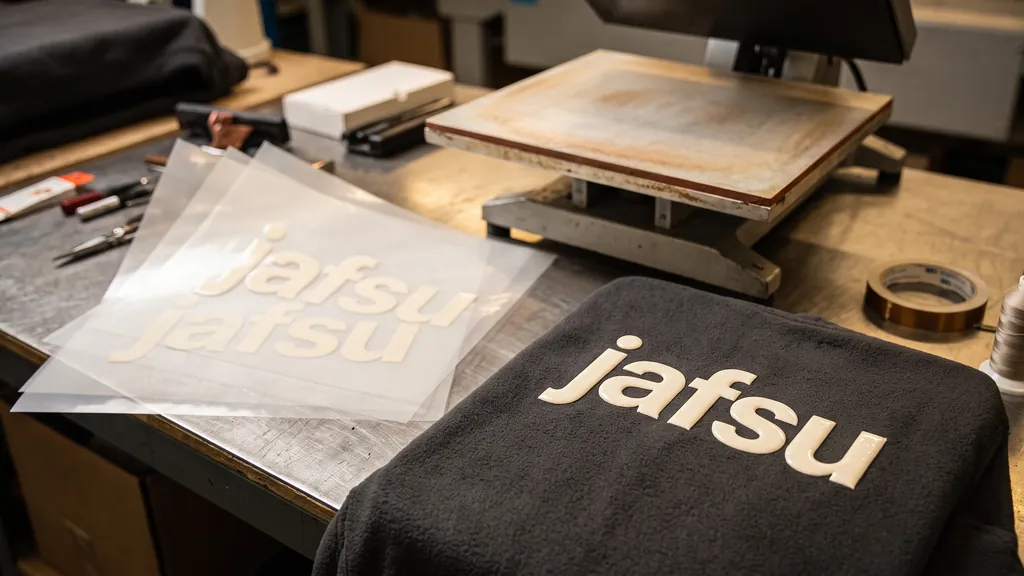
Custom puff print transfers
Raised transfers made on a carrier sheet and heat pressed, for small runs, mixed garment colours and awkward placements like hoods, cuffs and caps. Lower raise than screen puff, but no screen setup, so a five-piece test costs a fraction of a bulk print.
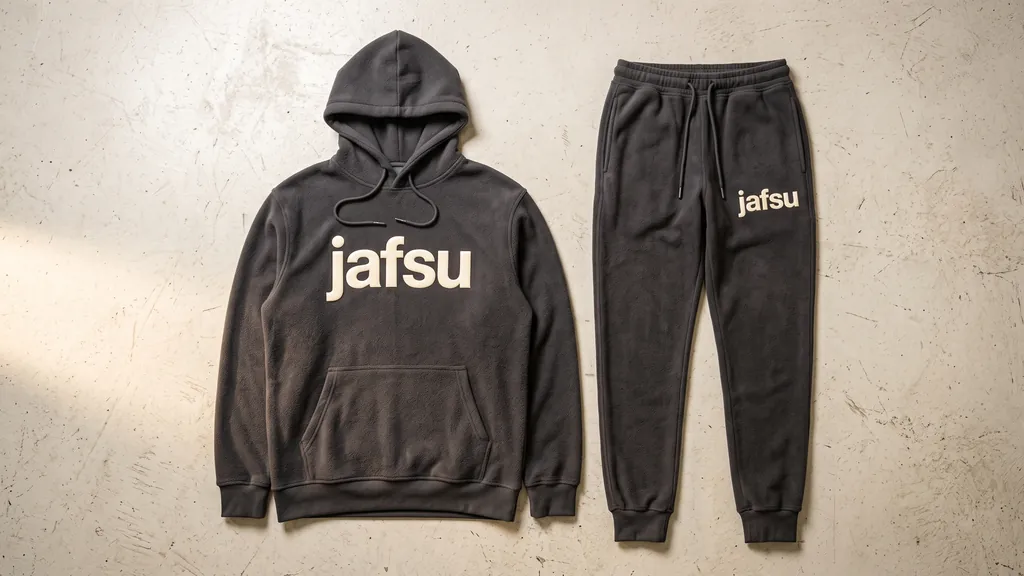
Tracksuits, joggers and sets
Two-piece tracksuit sets with the puff hit repeated on hoodie chest and jogger thigh, cut from a single dye lot so the ground colour matches. As a custom puff print streetwear factory we run both pieces on the same day, at the same dryer settings.
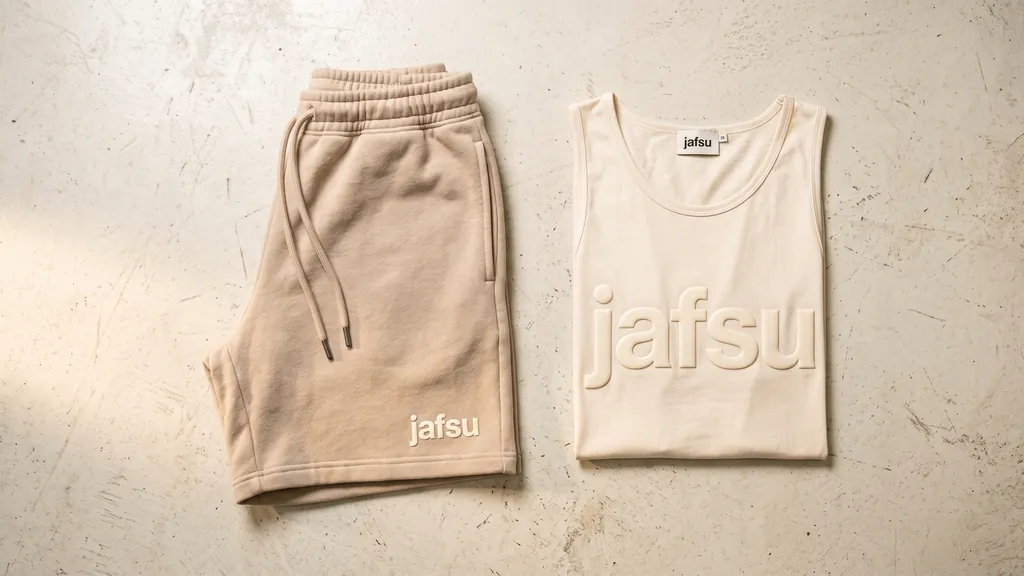
Shorts, tanks and summer bodies
The same block, lighter cloth. Puff on a leg panel or small chest hit keeps a summer capsule tied to the winter one, and single-colour puff on a plain body is the cheapest premium-looking print you can put in a range.
Six Lines That Decide Whether Puff Print Reorders Match
Send these to every custom puff print supplier you shortlist. The ones worth working with answer in numbers; the rest answer with adjectives.
- Minimum line width, stated in mm. Puff expands sideways as it rises. Anything under about 3 mm loses its shape, and text under roughly 12 mm cap height starts filling its own counters.
- Mesh count for the deposit. Puff needs a coarse mesh — commonly 24 to 86 threads per inch — because a fine mesh cannot pass enough ink to rise. A supplier quoting 160 mesh is not printing puff.
- Cure temperature and dwell. Plastisol puff is generally cured near 320°F / 160°C, held long enough for the whole deposit to reach temperature. Under-cure means no height and poor wash resistance; over-cure means collapse and scorch.
- Expected raise, in millimetres. Screen puff typically lands between 1 and 3 mm, puff transfers lower. Agree a target and judge the strike-off against it, not against a photograph.
- Colour count and layering. Puff over puff on a wet-on-wet run behaves differently from a single hit. Say how many colours raise and how many stay flat.
- Garment spec underneath. Fabric weight in GSM and oz/yd², knit construction, shrinkage tolerance and the exact woven label. A print sits on a garment; both need writing down.
A custom high quality puff print supplier can cost against this sheet in 24–48 hours, and the strike-off you sign off becomes the reference bulk is measured against.
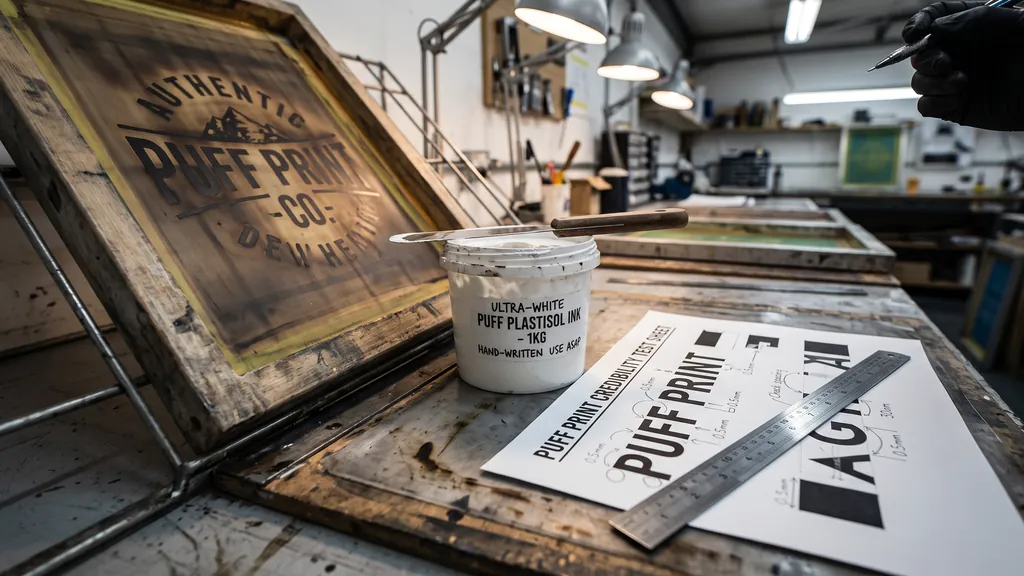
Artwork is checked before the screen is made
Every file gets a line audit first: thin strokes thickened, tight counters opened, halftones and gradients converted to solids or moved to a flat layer. Screen exposure, printing, curing, labelling and packing then all happen in one building, so the settings that produced your strike-off are the settings that run the bulk.
Puff Methods, Quantities and Lead Times
Three ways to get a raised print, and they are not interchangeable. Pick by run size, artwork and how much height the design needs.
| Method | How it works | Best for | Raise |
|---|---|---|---|
| Screen puff (plastisol) | Blowing agent in the ink expands in the dryer | Bold logos and thick lettering, 20 pcs up | 1–3 mm |
| Puff transfers | Raised film pressed onto the finished garment | Short runs, mixed colours, hoods and cuffs | 0.5–1.5 mm |
| High-density | Thick flat-topped deposit, sharp square edges | Crisp geometric marks, no rounded edge | 0.8–2 mm |
| 3D foam embroidery | Stitch over a foam core, no ink | Caps and small marks that must not crack | 2–4 mm |
| Tonal puff | Puff ink matched to the garment colour | Premium, texture-led drops | 1–3 mm |
| Stage | What happens | Quantity / time |
|---|---|---|
| Mockup | Artwork line audit, puff placement, itemised costing | 24–48 hrs |
| Strike-off | One printed piece for height, hand-feel and colour sign-off | 1 pc · 7–10 days |
| First drop | One design and colourway, split across S–4XL | 20–40 pcs |
| Bulk 50–300 pcs | Production with inline height and cure checks | 14–18 working days |
| Bulk 500–1,000+ | Volume run; price breaks at 100 / 300 / 500 / 1,000+ | 20–25 working days |
| Dispatch | DHL, FedEx or UPS express, door to door | 4–6 business days |
| Payment | Samples 100% advance; bulk 50% deposit, balance before dispatch against QC photos and video | PayPal · Remitly · Western Union · wire |
Line-width checker: will your artwork hold in puff?
Drag to the thinnest stroke in your design and see what puff will do to it. Sizes are for the printed artwork, not the original file scale.
How a Puff Print Order Runs Through the Factory
Every order takes the same five stages, whether it is 20 pieces or 2,000.
-
Artwork and costing
Send vector artwork or a reference photo with the garment spec. Back comes a line audit, a mockup showing what raises and what stays flat, and a per-piece cost split by garment, print and trims.
-
Spec lock
Mesh, ink system, target raise, colour count, print size and placement from the HPS, plus fabric weight and tolerances — all confirmed in writing before a screen is burned.
-
Strike-off
One finished garment, printed and cured at production settings. Feel the height, stretch the print, wash it. Nothing goes to bulk until this piece is approved.
-
Production
Cutting, stitching, then screen printing or transfer pressing at the locked settings, with height and cure checked through the run.
-
QC and dispatch
QC photographs and video reach you before the balance falls due, then express dispatch with tracking and paperwork handled here.
Four Kinds of Buyer, One Print Room
The brief changes; the dryer settings are written down either way.
Streetwear and DTC labels
Drop cycles, not seasons. Twenty pieces per design lets you shoot, list and sell a puff capsule before the next one is on the press.
Sellers moving off print on demand
Print on demand cannot give you height. A raised chest hit on your own heavyweight body is the clearest upgrade a graphics-led store can make.
Wholesale and bulk buyers
Distributors ordering repeat volume against a written print spec, with price breaks at 100, 300, 500 and 1,000+ pieces.
Agencies, gyms and clubs
Merch runs and team ranges alongside our fitnesswear production, so one order covers hoodies, tees and gym pieces.
Puff Print FAQ
What is puff print?
Puff print is screen printing with a blowing agent added to plastisol ink. The ink is printed flat through a coarse mesh, then the dryer heat makes it expand, leaving a raised design that typically stands 1 to 3 mm off the fabric. It reads as texture rather than graphic, which is why it suits logos, wordmarks and outlines more than photographs.
Does puff print crack or peel?
Properly cured puff flexes with the garment and does not peel, because plastisol bonds into the fibres rather than sitting on top as a film. Cracking almost always traces back to under-curing or too thick a deposit on a very stretchy body. Wash inside out, cold, and keep an iron off the print and it will outlast the garment’s colour.
What artwork works for custom puff print?
Bold shapes, thick outlines and heavy sans-serif type. Keep the thinnest stroke around 3 mm or more and text at roughly 12 mm cap height or larger, because puff spreads sideways as it rises and closes tight gaps. Gradients, halftones and fine detail do not survive — we convert those to solids or print them flat alongside the raised layer.
Custom puff print transfers or screen puff — which should I order?
Screen puff gives more height and a lower unit cost once you are past 20 to 50 pieces, but each colour needs a screen. Custom puff print transfers carry no screen charge, press onto any garment colour and suit hoods, cuffs and caps, at a lower raise. Most brands test with transfers and switch to screen puff when a design repeats.
What is the minimum order for custom puff print shirts and hoodies?
One piece for a strike-off, then 20 pieces per design and colourway for production, split across S to 4XL with youth sizes YS to YXL available. Most factories set 200 to 1,000 pieces, so a 20-piece run lets a label release a real puff drop without funding stock it has not yet sold.
Can I combine puff with flat print or embroidery in one design?
Yes, and it usually looks better than puff alone. A common build is a puff outline or wordmark with flat plastisol detail inside it, or a puff chest hit with an embroidered sleeve mark. Say which elements raise at the artwork stage so the separation is built correctly rather than corrected later.
Do you supply the garments as well as the printing?
Yes. We are a cut and sew factory first, so the hoodie, sweatshirt or tee is made to your own pattern, fabric weight and neck label, then printed in the same building. That matters for puff specifically: the fabric surface and weight change how the ink sits, so print and garment are matched rather than assumed.
How do you keep the puff height the same on a reorder?
By writing the settings down. Mesh count, ink system, deposit, squeegee pressure, dryer temperature and target raise in millimetres are recorded against your approved strike-off, and repeat runs are printed to that sheet. Price breaks apply at 100, 300, 500 and 1,000+ pieces, with lead times of 14 to 18 working days for 50 to 300 pieces.
Send the Artwork. Get One Piece Back.
Line audit, mockup and itemised costing within 24–48 hours, a printed strike-off in 7–10 working days, production from 20 pieces — from a custom puff print supplier that answers every enquiry inside a day.
WhatsApp +92 347 0849427 · info@jafsuenterprises.com · Instagram @jafsusports · every enquiry answered within 24 hours