
How to Dress Up a Sweatshirt: Premium Details Brands Should Build In
For a brand, that is an opportunity. An elevated sweatshirt sells across seasons, works in smart-casual offices and justifies a higher price than a standard fleece crewneck. This guide covers the details that make a sweatshirt look premium, how customers actually style them, and what to put in your spec when you commission a run.
By the Jafsu Enterprises production team · Updated 2 October 2026 · 4 min read
Jafsu Enterprises order terms
How to Dress Up a Sweatshirt
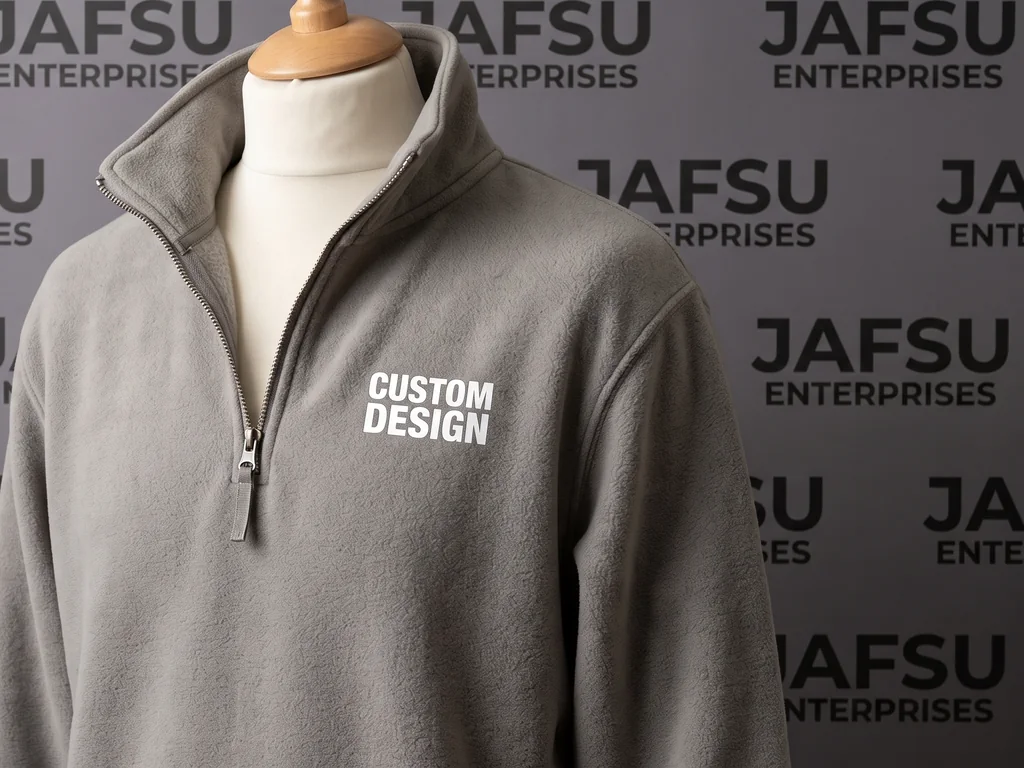
A sweatshirt dresses up when its construction does the work: heavier fabric that holds a clean line, a structured rib, a considered fit and understated decoration. Customers pair it with tailored trousers, a collared shirt underneath or a long coat on top, but they only reach for the sweatshirts that were built to look sharp in the first place.
Why Dress-Up Sweatshirts Matter to Your Range
- Higher price point. Customers pay more for a sweatshirt they can wear to work or dinner, not just the gym.
- Longer selling season. A well-cut heavyweight crewneck in a neutral colour sells from autumn through spring.
- Fewer returns. Structured fabrics and controlled fits look like the product photo on the body, which cuts fit-related returns.
- Brand positioning. One elevated hero piece lifts how customers see the rest of the collection.
The Construction Details That Make a Sweatshirt Look Premium
| Detail | Casual sweatshirt | Dress-up ready sweatshirt |
|---|---|---|
| Fabric weight | Lightweight fleece, under 320 GSM (9.4 oz/yd²) | Heavyweight, 380–450+ GSM (11.2–13.3 oz/yd²) |
| Fabric face | Loose, fuzzy surface | Tight, smooth face on French terry or three-thread fleece |
| Rib | Thin rib that stretches out | Heavier 1×1 or 2×2 rib cut to hold collar, cuff and hem shape |
| Fit | Very loose with a deep drop shoulder | Controlled body length, cleaner shoulder, tapered sleeve |
| Decoration | Large front print | Tonal embroidery, small chest logo or embossing |
| Finishing | Standard | Garment dye, enzyme wash, neat cover-stitched seams |
Fabric weight and face
Weight gives drape and structure; the fabric face gives polish. A heavyweight loop-back French terry or tightly knitted three-thread fleece with a smooth outer face looks closer to knitwear than to gym wear, and it resists the bagging that makes cheaper sweatshirts look tired.
Neckline and rib
The collar is the first thing seen above a coat or under a blazer. A crewneck with a firm rib that sits flat, a mock neck, or a half-zip with a structured collar all read as more considered than a loose, stretched neckline.
Fit and proportion
Oversized silhouettes are popular, but dress-up pieces need control: a body length that sits at the hip or can be tucked, sleeves that don’t bunch under a jacket, and a shoulder that doesn’t collapse. Grading the pattern to your own measurements, rather than adapting a stock block, is what keeps that proportion across every size.
Decoration
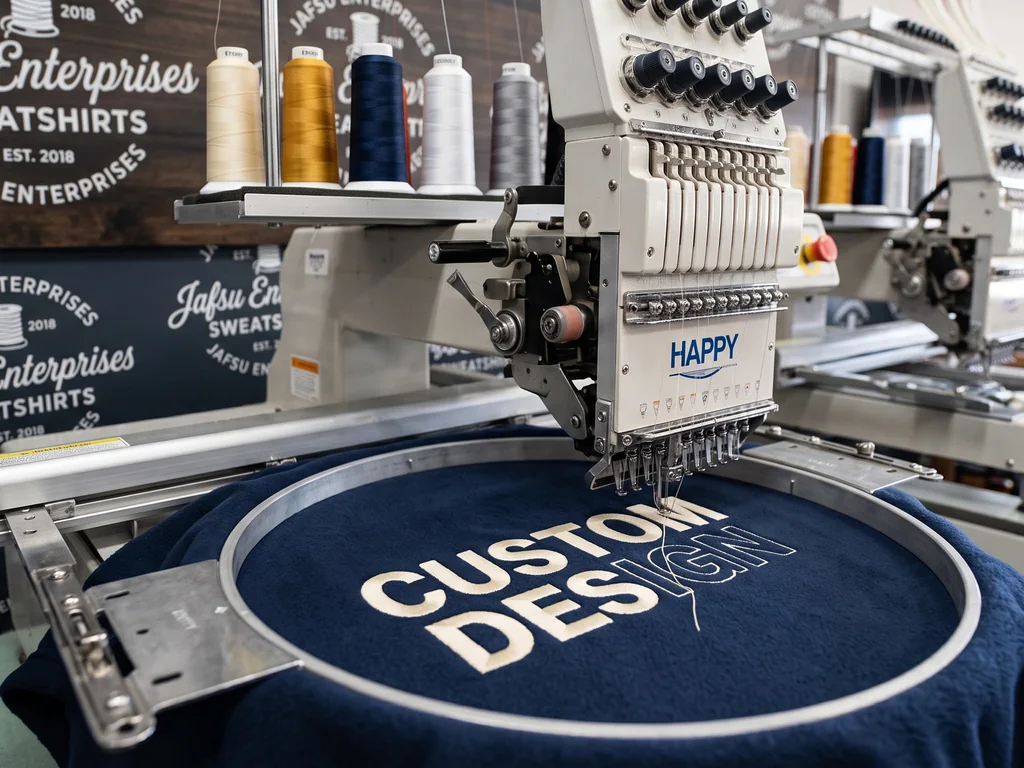
Big graphics say streetwear; small, tonal marks say premium. Tone-on-tone embroidery, a discreet chest logo or a subtle emboss lets the fabric and cut carry the look.
Colour and finish
Neutrals such as navy, charcoal, black, oatmeal and deep green dress up most easily. Garment-dyed and enzyme-washed finishes add depth and a lived-in softness that customers associate with higher-priced labels.
How Customers Style Dressed-Up Sweatshirts
Knowing the outfits helps you design the product and shoot the lookbook.
- Over a collared shirt. The collar shows at the neck, so the crewneck needs enough opening to sit cleanly over it.
- With tailored trousers and loafers. The hem should sit neatly at the waistband, not hang long.
- Under an overcoat or blazer. Sleeves need to be slim enough not to bunch.
- With a skirt or wide-leg trousers. A slightly cropped or tuckable body length works best.
Include at least one smart outfit in your product photography. Customers buy the version of the sweatshirt they can picture wearing.
Spec Checklist for an Elevated Sweatshirt Run
- Fabric type, composition and weight in GSM and oz/yd²
- Rib weight and construction for collar, cuffs and hem, specified separately from the body
- Graded measurement chart for every size, including body length and sleeve length
- Neckline style: crew, mock neck or half-zip, with zip type if used
- Decoration method, size and placement
- Dye and finish: piece dye, garment dye or enzyme wash, with a shade standard
- Labels and packaging for a retail-ready finish
Related Guides and Services
Send Your Design. Get a Costing Back.
Itemised costing and a mockup in 24–48 hours, a sewn sample in 7–10 working days, and production from 20 pieces per design and colourway.
info@jafsuenterprises.com · @jafsusports · Every enquiry answered within 24 hours.