
How to Start a Clothing Brand with a Manufacturer
Seven steps from idea to first delivery: what to make, how many, how to write the spec, how to shortlist factories and why one sewn sample comes before any bulk money. For new labels in the USA, UK, Europe and Australia.
By the Jafsu Enterprises production team · Updated 2 October 2026 · 9 min read
Order terms used in this guide
How Do You Start a Clothing Brand with a Manufacturer?
Pick one garment family, set a first-run quantity you can afford to hold, and write down the spec: measurements per size, fabric weight and decoration. Send the same spec to three to five factories, approve one sewn sample, then pay a deposit for a small first run and check evidence of quality before paying the balance.
The costly mistakes in a first drop are usually about quantity, not design. The route below keeps your first commitment small and your spec tight.
Seven Steps From Idea to First Delivery
Each step removes one way for a first run to go wrong. Skip one and it usually returns later as a cost.
-
Choose one garment family
Hoodies, tees or activewear. One family means one fabric group and one sampling track.
-
Set quantity and budget
Fix designs, colourways and pieces per design. Budget for one sample per design plus the run.
-
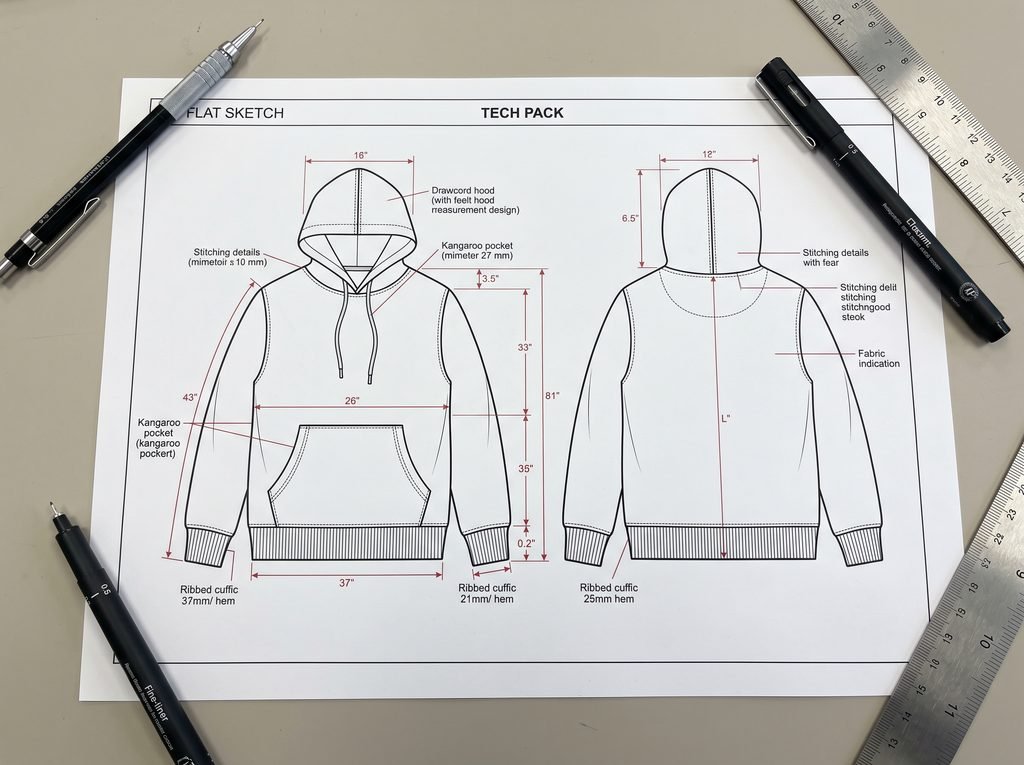
Write the spec
Measurements per size, fabric weight, trims and placements, in a tech pack or a measured reference garment.
-
Shortlist three to five factories
Send every supplier the same spec, then ask the six questions below.
-
Approve a one-piece sample
Check fit, hand-feel and decoration on a real garment. Revise until it is the one you want to sell.
-
Lock the spec, pay the deposit
The spec is signed off in writing, the deposit cuts fabric and production starts.
-
Inspect, ship, launch
QC photographs and video arrive before the balance is due, then tracked express dispatch.
Choose One Garment Family and Know Its Fabric Weight
Every garment family needs its own fabric and machines. Hoodies need fleece or French terry with heavy cuff rib; activewear needs four-way stretch and flatlock seams; team kits need sublimation-ready polyester. Launch all three and you run three sampling tracks and meet three sets of minimums.
One family with two or three designs keeps the spec simple and puts more pieces behind each design. That moves you toward the next price break, and ours fall at 100, 300, 500 and 1,000+ pieces.
Decide the fabric weight early: it sets how the garment hangs and feels, and a large share of its cost. US buyers usually work in ounces per square yard, the UK and Europe in GSM. One oz/yd² equals 33.906 GSM.
| Garment family | GSM | oz/yd² | Typical compositions |
|---|---|---|---|
| Performance sportswear | 140–220 | 4.1–6.5 | Interlock, birdseye mesh, micro poly, poly-spandex |
| T-shirts & light streetwear | 180–280 | 5.3–8.3 | Combed cotton, CVC, cotton-elastane |
| Gym & activewear stretch | 220–300 | 6.5–8.8 | Nylon-spandex, poly-elastane, four-way stretch |
| Hoodies, sweatshirts & joggers | 320–450+ | 9.4–13.3+ | French terry, 3-thread fleece, cotton or 80/20 |
Plan Your First Drop Before You Ask for Quotes
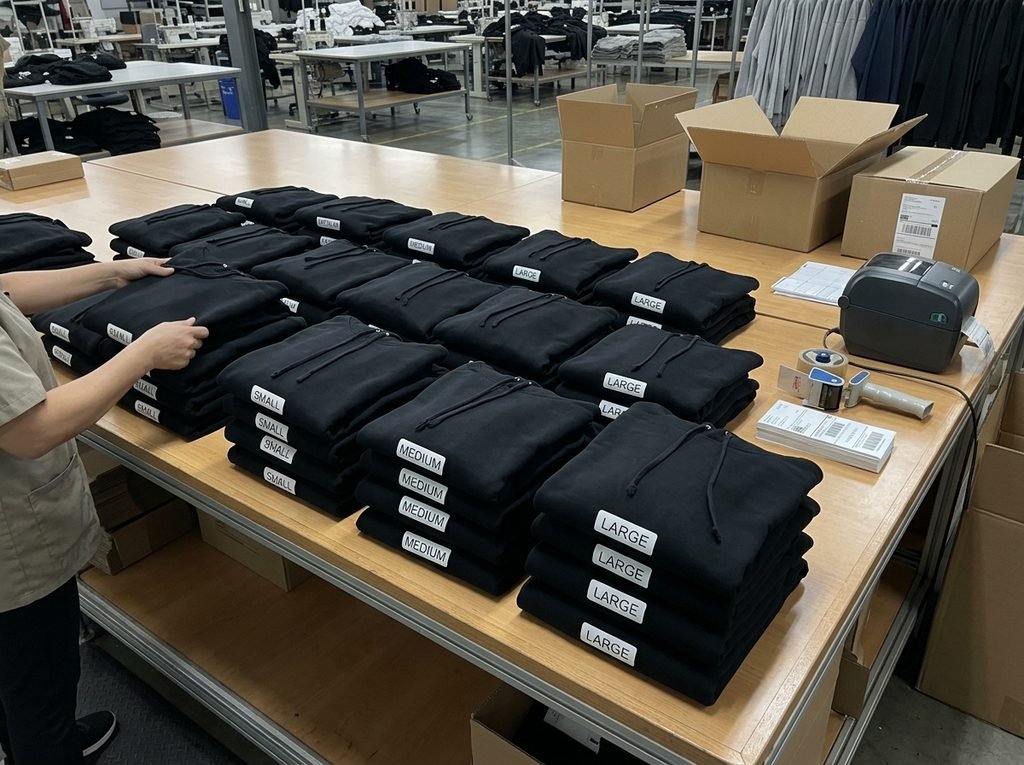
Set your designs, colourways and pieces to see the run size, samples to approve, depth per size and a realistic timeline, on our terms of 20 pieces per design and colourway.
- Total pieces in the run
- 120
- Samples to approve
- 3
- Pieces per size, per colourway
- 10average
- Production time after sign-off
- 14–18working days
- Costing to delivery
- 26–36working days · about 5–8 weeks
Your run has passed our first price break at 100 pieces. The next break is at 300 pieces, 180 more.
Includes costing, a 7–10 day sample, production and 4–6 days in express transit. Sample revisions and customs clearance add time.
How to Shortlist a Manufacturer and Spot a Middleman
Send the same spec to three to five suppliers, ideally as a tech pack. When every supplier prices the same garment, the differences in their replies tell you who they are.
| Ask about | A factory can show you | A warning sign |
|---|---|---|
| Samples | One sewn piece in your fabric and fit | A paid “sample run” of 50–100 pieces, or a stock blank with your print |
| Decoration | Printing and embroidery in its own building | “Our partner handles printing”, with no address given |
| Sizing | A graded chart with chest, length and sleeve for every size | “S to XXL” and nothing else |
| Pricing | Itemised per-piece costing: fabric, making, each decoration placement | One round figure per piece |
| Quality | Photographs and video of your run before the balance is due | Photographs only after the goods have shipped |
Six questions to put to every supplier
- Can I buy one sewn sample before committing to bulk?
- Is your minimum per design, per colourway or per size? Guide 03 explains the difference.
- Which processes happen in your own building?
- Will you send an itemised costing rather than a single price? Guide 04 shows what each line covers.
- Who owns my patterns and artwork?
- What evidence of quality will I see before paying the balance?
One-piece samples. A 20-piece minimum per design and colourway. Cutting to packing under one roof in Sialkot. Itemised costing in 24–48 hours. Your designs stay yours. QC photos and video before the balance.
Make It Yours: Private Label and Legal Labelling
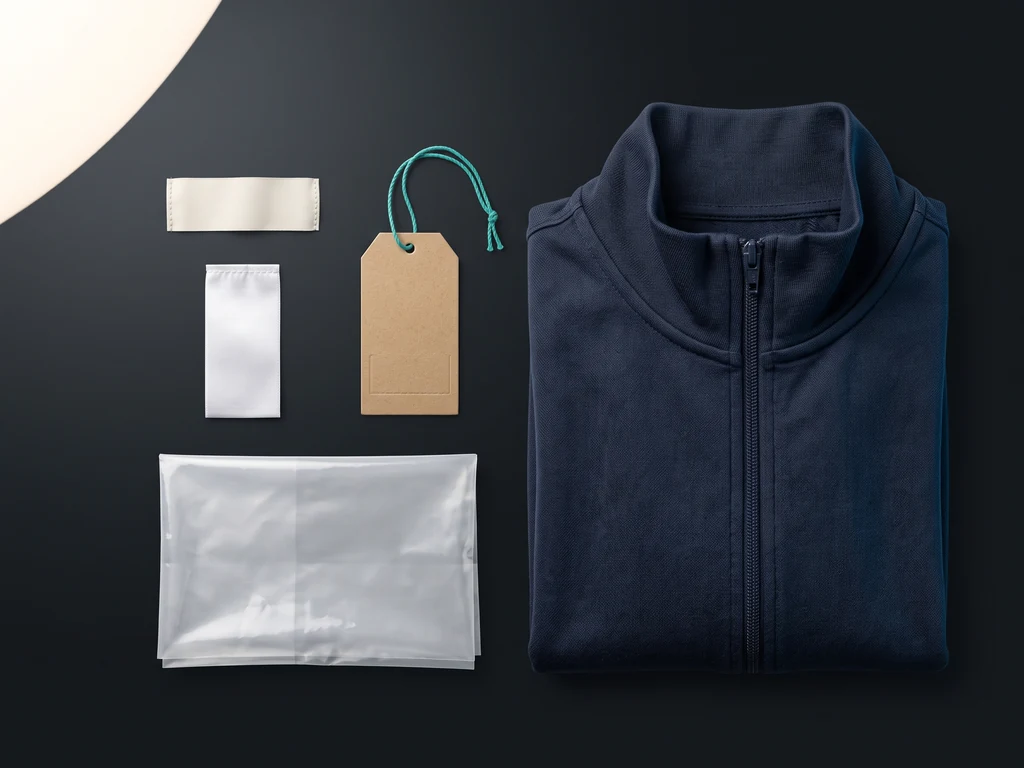
A brand is more than a print on a stock blank. With full private label manufacturing, the garment is cut to your pattern and arrives carrying your name:
- A custom woven neck label in place of a supplier’s tag
- A satin wash tag with fibre content and care instructions
- PVC or embossed swing tags
- Branded polybags, so each piece arrives ready for retail
Your designs, patterns and artwork stay your intellectual property.
Labelling rules depend on where you sell. In the USA, garments must show fibre content, country of origin, the identity of the manufacturer or dealer (a company name or RN number) and care instructions. In the UK and EU, fibre composition must be on the label. Confirm the rules for your market before you approve the neck and wash labels.
Six Mistakes That Sink a First Drop
Too many designs
Eight designs at 20 pieces is 160 garments of guesswork. Three designs at 40 pieces lets your best seller sell through.
Skipping the sample
A mockup cannot show hand-feel, shrinkage or where a shoulder seam drops. One sewn piece can.
A size curve on autopilot
An even split across seven sizes can leave spare 4XLs and no mediums. Weight the run toward the sizes your customers buy.
An unwritten spec
“Heavyweight” can mean 280 GSM to one supplier and 450 to another. Put numbers on weight, composition and every measurement.
Paying everything upfront
A deposit to cut fabric is normal. The balance should follow evidence of the finished run.
Forgetting landed cost
Unit price is not your cost. Add shipping, import duty and customs fees before you set a retail price.
Questions New Brands Ask Before Their First Order
How much money do I need to start a clothing brand with a manufacturer?
It depends on the garment, fabric, decoration and quantity, so treat any single figure online with caution. Build the budget from its parts: one sample per design, paid in advance; the first run at an itemised unit price; labels and packaging; shipping; and import duty. An itemised quote turns each line into a real number within 24–48 hours.
Can I start a clothing brand with no fashion experience?
Yes. Clear decisions matter more than experience: what you are making, for whom, in what fabric and quantity. A reference garment you like plus a list of changes is enough to start, and our tech pack service can turn it into a production-ready spec.
What is the minimum order to start a clothing brand?
At Jafsu Enterprises it is one piece for a sample and 20 pieces per design and colourway for production, split across the size curve. Many factories set 200 to 1,000 pieces per design, which is why the minimum matters more than the unit price for a first drop.
How long does it take to get a first run made?
Allow roughly five to eight weeks once your spec is clear: 24–48 hours for costing and a mockup, 7–10 working days for the sample, 14–18 working days for a 50–300 piece run and 4–6 business days in express transit. Each sample revision adds time.
Should I use a manufacturer in my own country or overseas?
Domestic production in the USA, UK or EU gives shorter transit and a local country-of-origin label. Overseas cut and sew usually gives a lower unit cost and minimum. Compare landed cost, meaning unit price plus shipping and duty, not unit price alone.
The Rest of the Brand Launch Series
Have a Design? Get One Piece Made.
Send a tech pack, reference garment or sketch. Itemised costing and a mockup in 24–48 hours, a sewn sample in 7–10 working days.
info@jafsuenterprises.com · @jafsusports · Every enquiry answered within 24 hours.